What Are the Key Stages of a Civil Construction Project?
Construction projects which are civil work might appear to be strenuous on the face of it, yet are normally organized and well guided in their course. Every stage is important in the planning and completion to achieve the safety, quality and efficiency. The knowledge of these stages assists the stakeholders in making sound decisions and preventing costly errors.
1. Project Planning and Feasibility.
Planning is the key to every successful civil construction project. This phase will entail the learning of the purpose of the project, estimation of costs, and the analysis of the technical and financial viability of the project. During this phase, surveys, soil testing and environmental testing are some of the activities undertaken. This stage is very critical as statistics on the industry reveal that poor planning is among the most common delays in projects.
2. Design and Engineering
After approving the project, architects and engineers come in to design the detailed drawings and layouts. This phase is concerned with structural design, materials and safety requirements. The correct planning of construction would make sure that all the technical considerations were made prior to the start of the construction. Local authorities also give approvals and permits at this stage.
3. Pre-Construction Preparation
Resources are marshalled prior to proper work being done. This involves contracting of contractors, acquisition of materials and schedules. Clearing land, levelling, as well as temporary facilities used during the process of site preparation, are also done here. Construction project management will play an important role in minimizing delays in the future as much as possible at this stage.
4. Construction Execution
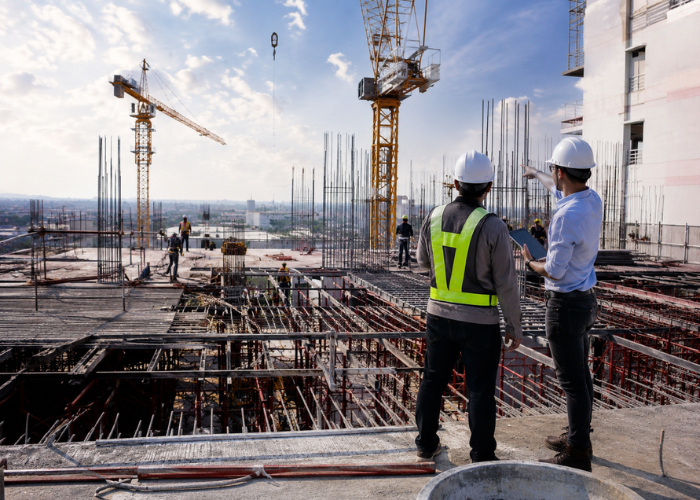
It is the most apparent phase of the real construction work. It consists of foundation, structural building and installation of amenities such as water, electricity and drainage. Quality requires skilled labor, machinery and continuous supervision. Periodic checks are used to facilitate compliance of the work with the design and safety requirements.
5. Monitoring and Control of Quality.
Constant monitoring is required during the construction process. The work of engineers and project managers is to monitor the progress, control risks and make everything on time. Checks in quality are performed in various stages to ensure high quality. The correct stages in the construction process can be used to detect any problems and rectify them before they develop.
6. Project Dissolution and Finalization.
After construction, the finalisation is done. Any remaining work that is commonly referred to as snag work is rectified, and the project is then delivered to the client. It is also during this stage that documentation, safety certifications, and operation guidelines are offered. The lifecycle of a construction project is smooth hence long-term durability and functionality.
Proper construction strategy enhances efficiency besides minimizing the risks and expenses. Every single stage, since planning to hand over, helps to make the project overall successful.
Conclusion
The knowledge of these stages will guide the clients and professionals to be on the same path. In a project where a lot of planning, execution and management are involved, organizations such as BrightKeyz expose high levels of structured skills and systematization when it comes to civil construction.
Recent Posts